Tuesday, September 17, 2024

Armchair Science

My office chair has armrests. Yes, I’m an armchair scientist.
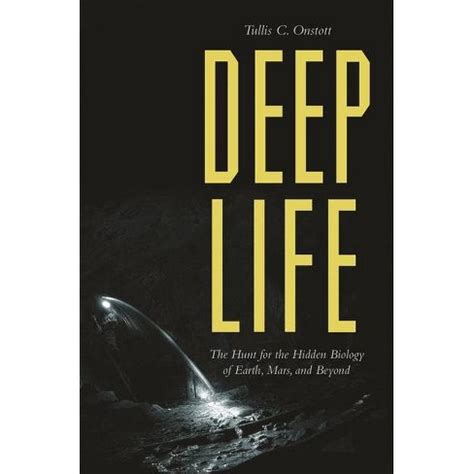


Why am I thinking about this? Because I am halfway through Deep Life by Tullis Onstott. It’s about the hunt for microbes miles below the earth’s surface. And how do you get there? Down the mines. The book introduced me to the field of subsurface geomicrobiology, but it’s not a typical science book. It’s more of a scientist’s adventure book that goes through the highs and lows of everything from the roulette wheel of grant funding, the whims of mine-bosses and customs agents, what it’s like to be sweating miles beneath the surface, and how to find MacGyver-skilled people. It’s about field work in the extreme.


I, on the other hand, as a computational chemist am as far away from field work as you can imagine. I sit comfortably in my office building and analyzing molecular structures from my desktop computer. All the number-crunching work is done by a high-performance cluster sitting in a cold room a building away that I can access via the internet with a few clicks on my keyboard. I’m an old-school command-line guy who uses the mouse as little as possible. I do regularly get up from my chair and walk two floors down to teach a class. (I eschew elevators.) I haven’t taught general chemistry lab in several years so I don’t even have an excuse to set foot in an experimental lab. However, I do go to our chemistry demo room a few times each semester to show off stuff in my chemistry lecture classes.


When you’re a field scientist who needs to collect living samples from deep-enough mines, your choices are constrained. You have to convince a mining company’s management that you’re not a spy or a saboteur, that you won’t slow them down, that you won’t cause an ‘incident’, and that it is to their benefit to let you go down their mines. To get good uncontaminated samples, you also need to scratch past a cave wall surface, and that means having the necessary equipment. And because these microbes are obligate anaerobes, you need to make sure they survive the trip to your makeshift lab so you can perform the analysis. The oxygen all around that’s life to us; it kills them. And some of them may be toxic. And you might need a laminar flow hood for your work, that somehow you have to get into your ramshackle on-site quarters.


I wouldn’t survive in the field. I have poor hands in lab that also regularly shake due to a neuromuscular issue. There’s a reason I am a theorist. I also thrive on having an organized schedule, having control over my time, and not constantly being thrown into chaotic situations. I have little in the way of MacGyver skills. When you’re out in the field, unpredictability is the name of the game. You have to adapt. It’s something I don’t think I’m good at. If the zombie holocaust descends, I will probably perish quickly, or join the robotic horde depending on what type of zombie-virus we’re talking about.


I do enjoy discovering new things though! If I didn’t, I probably wouldn’t be an academic. But I do it through reading and running calculations, at least in my work life. I like learning new things even though I may not have the physical dexterity or strength to perform them. And discovery is always exhilarating! Now that I’m older and well aware of my physical limitations, I see many advantages of my life as an armchair scientist. And I’m happy to live vicariously through reading the adventures of folks out in the field and in the deep.

Tuesday, September 10, 2024

Bending the Elements

When discussing Aristotle’s elaboration of the four elements as the foundation of matter in my first day of an introductory chemistry class, I used to spend five seconds poking fun at the 2010 movie The Last Airbender. I only watched it once (for free on DVD) and I thought it was very poor. I had high expectations. An interesting theme that incorporated Earth, Water, Air, Fire, into daily life. A famous director. What could go wrong? It was a disappointing mess. Elemental was not great, but much better. And I had recently proposed teaching a non-majors class titled Earth, Water, Air, Fire, Life!


Then several years ago, a student suggested that I watch the Nickelodeon animated TV series that the movie was based on: Avatar, the Last Airbender. A second student piped up to support the first one and both thought the TV series was very well done. I’m very glad that two brave students on the first day of class were willing to challenge me on my poking fun at The Last Airbender. I should say they didn’t think the movie was all that good either, so we were in agreement there, but they encouraged me to give the TV series a chance given my interests in ancient ideas about elements. I nodded politely in response. But in my mind, I was skeptical. I associated the name Nickelodeon with children’s cartoons. (I didn’t watch these growing up in a different country.) Could anything good come out of there particularly when I associated it with Sponge Bob Square Pants (which admittedly I haven’t watched either).


Some years passed. I forgot about it. But then this summer something prompted me to watch the TV series. Maybe it was a conversation with my summer research students or maybe prompted by something I read, I don’t remember why. Anyway, I look at my local library catalog and they had the DVDs of almost the entire series (missing one disc in Season 3). So, I settled down to watch Season 1. Episodes are just 20 minutes long, and they were good! The main protagonists were interesting characters and I found the story engaging. I also cheered whenever Appa, the flying bison, got something interesting to do. Appa reminds me of the enigmatic Cat-Bus in My Neighbor Totoro.


I’m most of the way through Season 1. My quick synopsis: there are four nations and each of them has practitioners in the art of manipulating their associated element. The Fire nation has attacked the other three and has been dominant. Remnants of the Earth and Water nations have fled or are in hiding, protecting themselves from the conquering Fire nation. The Air nation seems to have mostly disappeared. The main protagonist, Aang, is the reincarnated Avatar who supposedly can be a master of all four elements and end the war. But he’s only twelve years old, and having learned air-bending skills when he was young, still needs to master the other elements. Hence: Avatar, The Last Airbender.


The most visual aspect is how to manipulate the element of your specialty to do your will. Earth-benders manipulate the stuff of earth from the ground itself. Water-benders can move water to do their will. Fire-benders seem to mostly create fire and launch them as fireballs (great for war). Air-benders can move air and utilize its currents in their own movement. Three things seem to be needed to manipulate an element: innate propensity, the movement of your arm, and mental focus. Not everyone in a nation has the ability to bend matter. Those that do undergo training to learn the mental focus and the arm movements. Manipulating matter mainly consists of being able to collect it, shape it, and throw it, often against the force of gravity. It’s similar to magic.


Of the four elements, air is the lightest and should be the easiest to manipulate against gravity. From a molecular perspective, you need to apply higher pressures in one vicinity to channel the molecules into a lower pressure area. It’s not obvious how one would do that, but a skilled air-bender can generate powerful winds and cyclones suggesting that quite a bit of energy may be involved. Since N2 makes up almost 80% of our atmosphere, perhaps an air-bender has a special connection to these molecules in their gaseous form and can magically command or will them to move in a particular way. Essentially the air-bender needs to overcome the entropy and cause these molecules to take a low probability macroscopic arrangement.


For water, only one substance is involved: molecular H2O. Perhaps water-bending is similar to air-bending in this regard. The water-bender has an affinity to manipulate the movements of this molecule and overcome gravity. I’ve seen water benders create waves, push water, pull water, and turn it into ice. So the water-bender needs to also have the magical ability to control the hydrogen-bonding between water molecules. Essentially the water-bender uses arm movements that cause bulk water to mimic that same movement. Maybe there’s a hidden force that can be turned on and off by focusing the mind that provides an unseen action-at-a-distance relationship between the arms/hands and the substance H2O.


Earth is a little trickier since there are a whole bunch of substances that make up the earth. Sand is mostly silica but rocks can be made up of all sorts of elements. The primary distinction between Earth and its Water and Air counterparts is its solidity. Air-benders manipulate the gaseous state. Water-benders manipulate the liquid state. Earth-benders manipulate the solid state. But there seem to be limits. Earth-benders don’t manipulate all solid substances. They seem to certainly move ‘natural’ non-man-made stuff, but there is some inconsistency on whether they can manipulate man-made solids: concrete, metal alloys, and the like. So are they limited to some elements but not others? I don’t know. Could water-benders manipulate pure ethanol or mercury which are also liquids? Or are they restricted to H2O? An air-bender who manipulates O2 could be a killer. Can Aang move different gaseous substances in different ways? I don’t know.


The fire-benders seem to mostly use their art to create fire and launch it as a projectile. Chemically to make ‘fire’ you just need a combustible material and energy to get the chemical reaction started. There are small amounts of methane and other combustible gases in the atmosphere. Do fire-benders essentially manipulate the reaction of methane with oxygen? That might be a sort of air-bending? There’s no sign that they start using a solid combustible. And water seems to put out their fire. Or maybe they use friction as an energy source? Again, I don’t know.


The chemist in me seems to be trying to peg element-bending abilities with the chemical substances most involved. But maybe there’s a better way to think about it that I haven’t stumbled upon. Regardless I’m still enjoying the TV series and I’m glad my students encouraged me to give it a chance!

Friday, September 6, 2024

First Week: Fall 2024 Edition

I just have two classes this semester, my usual General Chemistry 1 and Physical Chemistry 1. Once again, I am teaching the Honors preceptorial, but with the smaller incoming class at my university (probably impacted by FAFSA woes), I only have fifteen new academic advisees instead of the usual twenty in my G-Chem 1 class. This morning, I recited all of their names correctly in class. Hooray! Like last year, I’m having each of them visit me during my drop-in (office) hours so I can learn a little more about each of them as individuals. I’m always delighted to get to know new students and they seem like a good bunch!


The one major change I’ve made to my G-Chem class is ditching the textbook. While I have chosen a decent online textbook as a reading reference that also has relevant practice exercises, I am supplementing the reading by providing Class Notes for every lecture. These do not recap the lecture in detail, but rather note the key concepts. Students still have to come to class to see the examples and engage with the explanations of the conceptual material. I will also continue to employ Study Guides. I’ve made some minor rearrangements in content. Nuclear chemistry has been moved back to early in the semester. I chopped up the standard chapter on liquids and will sprinkle it throughout the semester, and intermolecular forces has moved up earlier. I’m also making some minor moves in the chemical bonding section and stuff related to wave-particle duality. So there’s some amount of work on my part, but it’s not a major overhaul. The big question is whether the students are sufficiently prepared for the exam without the usual online auto-graded homework. First exam is at the end of the third week, so we’ll see.


I am not making many changes to P-Chem, just minor tweaks to most of the material with some minor rearrangements to the last two weeks where I go into different chemical bonding theories. Last year, I did expand Valence Bond Theory and I did culminate the class by examining why triplet molecular oxygen is such a strange molecule. But it didn’t feel as streamlined so I need to figure out how to do this better. I only have eight students, and I had five of them in G-Chem 1, G-Chem 2 or both. Most of them know each other, and that’s a good thing because I tell them that P-Chem is a team-sport. I’m encouraging them to work with each other on problem sets, visit me often to ask questions, and study together for exams.


On the first day of P-Chem, I couldn’t get through the material I had prepared. On the first day of G-Chem, I barely got through but rushed a little at the end. It could be that both classes were a little more interactive – perhaps students are more willing to speak up in smaller classes? But the other thing I’ve noticed over the years is that I tend to spend a little more time pontificating early-on about the nature of chemistry, science, and model-building to understand the natural world. I think this approach pays dividends later, or at least I hope so.


It was a busy week because in addition to a bunch of first-week administrative meetings, I also trained two new research students. Because of differing class schedules, I wasn’t able to train them together, but that’s okay. I did spend time last week putting together tutorials for the new research software we’ll be using. I think I did a relatively good job because there weren’t many typos and the two students (when asked) said they thought the guides were clear. I have two returning students (from summer research), one of whom has learned the new software and the other one will do so this afternoon. The semester will be less productive than the summer research-wise, but I’m looking forward to writing up the good work that my students did this past summer. I also have a potential new collaboration but I’ll need to delve in a little more to see if it will be a good fit.


Whew! It’s been a great first week. Tiring, but it’s so nice to feel the energy of being back on campus with students who are excited to embark on their first semester of college or coming back from the summer and reconnecting with their friends.

Tuesday, August 20, 2024

Last Ditch?

I have regularly contemplated ditching the textbook in the classes I most regularly teach – the year-long sequence of general chemistry and physical chemistry. In my first year as a new faculty member, I used the books the department had been using. We have multiple sections of general chemistry, and the instructors decide as a group which textbook to use. There is only one section of physical chemistry, however, giving full freedom for the sole instructor to switch books.


My general rule is that I should use a textbook at least twice before deciding whether to ditch it or keep using it. The first year I use a new textbook I’m just getting used to it. I should not be too quick to write it off unless it seems like an utter disaster. And I would not pick an utter disaster in the first place. In P-Chem 2 (Statistical Thermodynamics), I went through three textbooks giving them two years each. While each textbook was subsequently better than its predecessor, none was a good fit with the way I wanted to teach statistical thermodynamics. (All three were “standard” P-Chem textbooks used at many universities.) Hence, I did my first ditch and switched to creating worksheets and problem sets. Many years have passed since and I’ve been happy with my decision to ditch.


That third textbook worked well for my approach to teaching P-Chem 1 (Quantum Chemistry). They even had a standalone version of the textbook for the semester-long course, rather than the full year of P-Chem. I used it for years. But two years ago, I decided to rearrange some content so I could incorporate modern valence bond theory and also introduce hands-on electronic structure calculations during class sections. Since my worksheets had worked well for P-Chem 2, it was a good time to ditch the textbook for P-Chem 1. I converted my lecture notes into similarly formatted worksheets. I like the new arrangement but it still needs tweaking. There’s always room for improvement!


For G-Chem, there are more constraints to making textbook changes because it is a group decision. And when you are running more than ten sections of the course, this also means a diversity of opinions from the many instructors. I think we’ve used four different textbooks in the 20-25 years I’ve been at my current institution. But in the last several years I’ve become increasingly disillusioned with the present textbook and, for that matter, any online homework management system (which I feel has unfortunately become the driving force in textbook adoption). So this coming fall I’m breaking with tradition and will ditch the textbook. Since I will be teaching the small honors sections of both G-Chem 1 and G-Chem 2 this coming academic year, there will be little disruption with much fewer students switching sections. At least that’s my hope.


My plan is to use an open access textbook as a resource. It’s a decent book and covers the content reasonably well, though not as good as the very best commercial texts out there. I will supplement these with Course Notes for each class. It will take time for me to generate these extra materials, but I think it’s worth the effort. I introduced Study Guides a couple of years ago in G-Chem, and I think these have worked well based on student feedback. They are still being tweaked as I re-work the material in this new iteration of G-Chem. I will retain most of the topics following the usual sequence, with a few minor changes. We’ll see how it goes. If it works well, this might be the last ditch where textbooks are concerned! (Unless I get to teach biochemistry again, and I’ll have to decide what to do then.)

Sunday, August 11, 2024

Also Liked

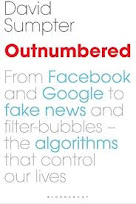
I’m in Part 2 of David Sumpter’s Outnumbered. There’s a discussion on superforecasters and how they continuously update their expectations by weighing and incorporating new information. Sumpter also compares the performance of prediction markets versus algorithmic crunching of polling data from FiveThirtyEight. There’s no clear winner. Crowd-sourcing sometimes helps, but sometimes leads you astray.


The chapter that most grabbed my attention analyzes the “Also Liked” effect, named after Amazon’s algorithm showing you that “customers who bought this item also bought…” or “you might also like…” It’s clear that users find this helpful to narrow down the plethora of choices which would otherwise be overwhelming. The fact that many other apps do the same thing underscores its effectiveness. The algorithm recommends. You’re welcome to ignore its recommendations, but let’s face it, most of us don’t want to wade through gobs of irrelevant stuff.


Sumpter runs a few simple simulations to see how these algorithms, over time, filter what you see and don’t see. The results are interesting. All it takes is a few early “likes” that make the appropriate connections to catapult something into the few vaunted choices that are displayed. That’s even true for a small data set. If you considered thousands or millions of products, the early advantages compound exponentially. Slightly-better-sellers become best-sellers in a self-fulfilling prophecy, algorithmically controlled. When you upvote a news story or website in social media, the upvote quickly cascades into more upvoting.


A related phenomena relevant to academia are citation statistics. Sumpter provides a data plot showing proportion of articles versus number of times they are cited. The data follows a power law (you see a straight line in a log-log plot). Sumpter writes: “Power laws are a sign of vast inequality.” When examining the data over time, it starts to resemble the “Also Liked” effect. The rich become richer in fame. The poor get relegated to obscurity. We now have the h-index (for authors) and the impact factor (for journals) and a vicious cycle ensues. But more broadly with respect to ubiquitous social media, Sumpter writes: “Inequality is one of the biggest challenges facing society, and it is exacerbated by our lives online."


From there, Sumpter moves to examine echo chambers and filter bubbles. There’s some interesting old data looking at political blogs from 2004 in the leadup to the U.S. presidential election that year. Democrat and Republican blogs linked nearly exclusively to their own writers with little cross-over. But all of them still linked to the same limited mass media. By 2016, this had changed. Mass media divided into and joined their respective echo chambers. But with the implementation of “Also Liked”, what you were presented when you logged on to social media became filtered more and more towards what you liked or what your friends liked. That’s the filter bubble. It also explains why conspiracy theories proliferate and gain steam. But a strange thing happens if the conspiracy theory becomes too popular too quickly. When enough naysayers and doubters “like” each other’s responses, their views can start to eclipse those of the original conspirators.


Sumpter presents analyses by Michela Del Vicario and her team looking at the echo chambers of scientists versus conspiracy theorists on Facebook. Both are echo chambers and filter bubbles. Most of the general population (at least in Italy) tune them out. The features of the posts are interesting. Analyzing the words, “the general rule is that the higher the activity of the user, the more negative words they use… the effect was stronger for scientists… and the more active they were on Facebook, the more negative they became. Becoming a dedicated member of an echo chamber is not a route to happiness.” Worse in my opinion: “Not only are conspiracy theorists less grumpy than scientists, their shared posts are also more popular than those made about science news. This is particularly worrying since many of the conspiracy theories are about science.”


The increasing isolation of individuals within modern society, and the speed at which the internet proliferates ideas, have made it very hard to stop and think. We’re too busy reacting. I used to “like” posts from Facebook friends, back when I used it. But if I ever get back to it, I might stop doing so. Instead, maybe I should spend more time making conscious choices about personal connections and not feed the filtering algorithms. “Also liked” seems like a boon, but it can also be an insidious curse.

Saturday, August 10, 2024

Data Alchemy

I’m reading David Sumpter’s Outnumbered on “the algorithms that control our lives”. Sumpter is an applied mathematician known for Soccermatics which I haven’t read, but I have read at least one of his research papers and found his writing lucid. I wanted to read more and Outnumbered was at my local library. Convenience was enough of a filter for me to choose easier access and being lazy. Sumpter will discuss filter bubbles later in his book but today’s post is on earlier chapters.


All the chapters are short and very readable; there are a few tables and graphs that aid the explanations. Sumpter begins by explaining how principal component analysis (PCA) works. But he does so with interesting examples such as Facebook friend connections and who likes what, and whether you can extract interesting data to build a composite profile. He tackles the Cambridge Analytica scandal head-on, and I found compelling his argument that it was mostly hyperbole. The targeted ads being placed by algorithms aren’t as effective as the tech companies (hungry for your money) say they are.


The chapter I learned the most from in Part 1 of his book is titled “Impossibly Biased”. Sumpter goes through the COMPAS algorithm used to assess if someone who commited a crime is at low or high risk of re-offending. There were claims and counter-claims of the algorithm being biased. But bias is in the eyes of the beholder. With some numbers and simplified examples, Sumpter explains why if you construct any two-by-two grid, it is “impossible to have both calibration between groups and equal rates of false positives and false negatives between groups” unless the two groups you study truly behave identically for a given question you are asking. There is a mathematical proof for this. Sumpter concludes: “There isn’t an equation for fairness. Fairness is something human. It is something we feel.”


The chapter I found the most interesting from Part 1 is titled “The Data Alchemists”. Some of his Soccermatics work comes into the story, but Sumpter also provides examples from Spotify and those seemingly creepy ads from Facebook or Google that seem to know you. There’s also discussion of a study comparing how COMPAS does versus volunteers on Mechanical Turk. Humans, not trained as judges, do just as well as the algorithm on average. As to what the algorithms might recommend to you, Sumpter argues that they work well on a group level, but not necessarily on an individual level. Yes, it does seem spooky when you receive a targeted ad that seems to “read your mind” but the algorithms aren’t so fine-grained. They aren’t decrypting your WhatsApp messages or recording your phone conversations. Sumpter says: “The more plausible explanation is that data alchemists arefinding statistical relationships in our behavior that help target us: kids who watch Minecraft and Overwatch videos eat sandwiches in the evening.” They’re correlations that may or may not have any clear causal connections.


Technology will continue to advance. These algorithms might get better. But they might not. One of the challenges of machine learning with large data sets with millions of variables is that we no longer understand exactly how these algorithms work. This also means that we don’t quite understand when and how they fail. Yes, we can put in band-aid fixes to reduce the symptoms of “bias” or “hallucination” but there’s no solution to the problem. Humans are not computers. Brains are not software neural nets. Manipulating data is what algorithms do. Interpreting those manipulations to make things “work better” (whatever that means) is still both science and art. As a chemist, alchemy is the appropriate word to describe it.

Sunday, August 4, 2024

Sustainability (with Data)

I’m reading Not the End of the World by Hannah Ritchie, a data scientist and communicator. The book leverages data analysis to strike an optimistic tone about “how we can be the first generation to build a sustainable planet”, the subtitle of the book. The influence of Hans Rosling can be seen in her work – while there are things that are getting worse for the planet and humankind, many things are also getting better. Each chapter comes with things we should be working on, and things we shouldn’t overly stress about. Ritchie doesn’t sugarcoat the data, but she interprets it in context.


She begins with the provocative idea that “the world has never been sustainable” making use of the United Nations definition of sustainability as “meeting the needs of the present without compromising the ability of future generations to meet their own needs”. Humans have been changing the world and its flora and fauna for thousands of years, be it through expanding agriculture or hunting larger beasts to extinction. But there have been many improvements in human health and longevity and improving standards of living. On the other hand, we’ve been gobbling up resources and it becomes questionable what we’re doing to future generations. Ritchie tackles seven problems: air pollution, climate change with temperature rise, deforestation, the food network, loss of biodiversity, plastics in the ocean, and overfishing.


I’m lucky to live in an area where the air quality is relatively good. When I was in graduate school in the ‘90s, folks who had lived in that same area in the ‘70s would tell me horror stories of the smog. The Clean Air Act in the U.S., implemented in 1970 and signed by Nixon (who also created the EPA, who apparently didn’t care about environmental issues, but who cared what voters and the public thought). Ritchie, based in the U.K., provides plots showing the peak of air pollution from the ‘50s to the ‘70s and how the emission of various gases and black carbon have plummeted approaching 18th century levels. Even China has passed its air pollution peak, and that wasn’t just because they hosted the Olympics. Ritchie discusses the need to provide access to clean cooking fuels, remove sulfur from fossil fuels, and end winter crop-burning (something I didn’t know about).


Climate change is tricky – you’d assume that everyone should just switch to “renewable” energy as soon as possible, but that’s not so easy because greenhouse gas emissions has multiple sources. There are trade-offs in each of these energy-hungry sectors. Three-quarters of our transport emissions come from driving on roads. I was surprised that shipping and aviation contributed only ten percent each. Electric vehicles help but there are tradeoffs; better still would be redesigning our cities and living spaces to reduce the use of cars. What caught my attention was food. Producing beef is an order of magnitude worse than chicken; plant-based proteins are even better. We also need to reduce overconsumption and wastage. I also learned that eating “local” or “organic” aren’t necessarily better. It depends. Ritchie provides both the data and the analysis.


Growing up in the tropics, I appreciated Ritchie’s nuanced discussion on deforestation and the protection of biodiversity. Yes, humans have cut down a third of the world’s forest mainly to make room for agriculture. But you can start to see the recovery at least in some “richer” countries. I remember the controversies surrounding palm oil some years ago. Ritchie tackles the health arguments and myths, but she also discusses the productivity of palm oil per hectare compared to almost any other common oil crops. Palm oil is more sparing in terms of land-use. The issue of beef comes up again because it’s particularly greedy for land-use where we’re growing crops mainly to feed the cows. Lamb actually takes a little more land use, but has lower emissions than beef. It was however heartening to see Ritchie’s data that the world may have passed peak agricultural land use and looks like it might also be reaching peak fertilizer use. Humans have been able to increase crop yields to feed the planet through a variety of strategies. Norman Borlaug gets several mentions.


On the topic of biodiversity, I learned from Ritchie’s charts that in terms of global biomass measured by carbon, plants are 82%, bacteria are 13%, fungi are 2%, and animals are 0.4%. Within the animal category, humans are 2.5%, livestock are 4%, and the largest shares go to fish at 29% and arthropods at 42%. Are we humans causing the Earth’s sixth mass extinction? Depends on how you look at it. Overall, biodiversity is decreasing but there’s a lot of variation. Some species are showing increases or recoveries; others continue down the path to extinction. And ecology is complex. You think you can do this one thing to affect this one thing, and then find out that there are many unanticipated knock-on effects. Ritchie also provides graphs showing the leveling of tonnage in wild seafood catch compared to aquaculture; and there’s also a bar chart on the carbon footprint for different kinds of fish. Apparently sardines have a very low carbon footprint. (Lobster and flounder are very high.) Tuna is a little better than chicken, and salmon does even better in this regard.


What I liked about Ritchie’s book is that it made me stop and think about the complex web of sustainability and ecosystems. I might even make some gradual lifestyle changes in what I eat, although as it is I rarely eat beef or lamb. For someone living in the U.S., my consumption of energy is relatively low and I buy very little outside of food. I won’t give up driving just yet (although my mileage per year is probably on the lower side). I could start composting and do a better job sorting my trash and not wasting stuff. I thought Ritchie did an effective job using the data to marshal arguments, and it’s something I could improve in my teaching to help students do so better. Ritchie’s book is a very accessible read and I recommend it.